Ulrich Brooks · 24 October 2026
Exploring Data Synchronization Challenges in Scalable Notification Systems for Growing Tech Ventures
Tech ventures scaling their operations often encounter data synchronization hurdles when expanding notification systems to handle millions of users across multiple regions, and these issues stem from the need to maintain consistency while managing high volumes of real-time updates. Research from distributed systems studies shows that notification platforms must balance speed with accuracy, particularly as user bases grow beyond initial prototypes into enterprise-level deployments.
Core Technical Barriers in Distributed Notification Architectures
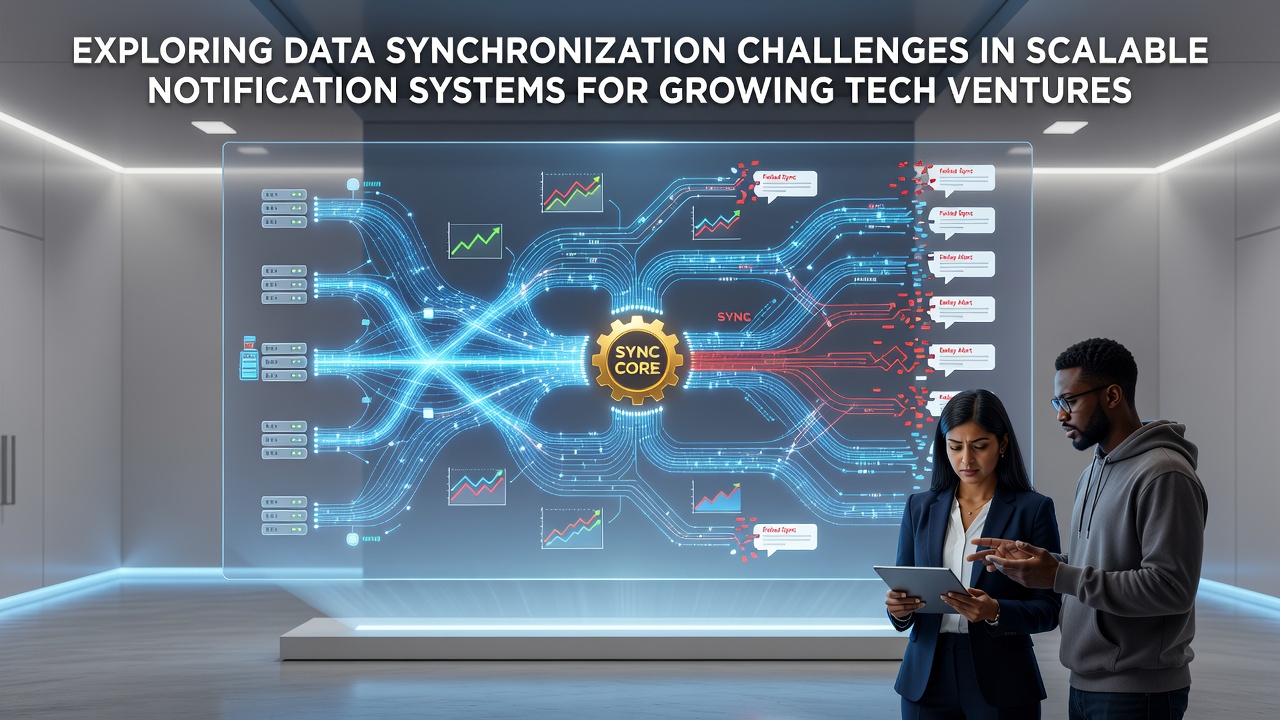
Notification systems rely on event-driven architectures where messages propagate through queues and databases, yet synchronization falters when network partitions occur between data centers located in different time zones. Observers note that growing ventures face increased latency because data replicas must align across nodes, and this process intensifies during peak traffic periods such as product launches or seasonal campaigns. Studies indicate that without proper conflict resolution mechanisms, duplicate or delayed alerts reach end users, which disrupts engagement metrics tracked by analytics platforms.
Those who examine these setups find that the CAP theorem plays a central role, forcing trade-offs between consistency, availability, and partition tolerance in notification delivery pipelines. Data shows that many early-stage companies prioritize availability to keep services responsive, while consistency checks get deferred, leading to temporary discrepancies that resolve through eventual consistency models. In October 2026, reports from technology research groups highlighted how several ventures adjusted their replication strategies after observing synchronization lags during global expansion phases.
Impact of User Growth on Event Propagation
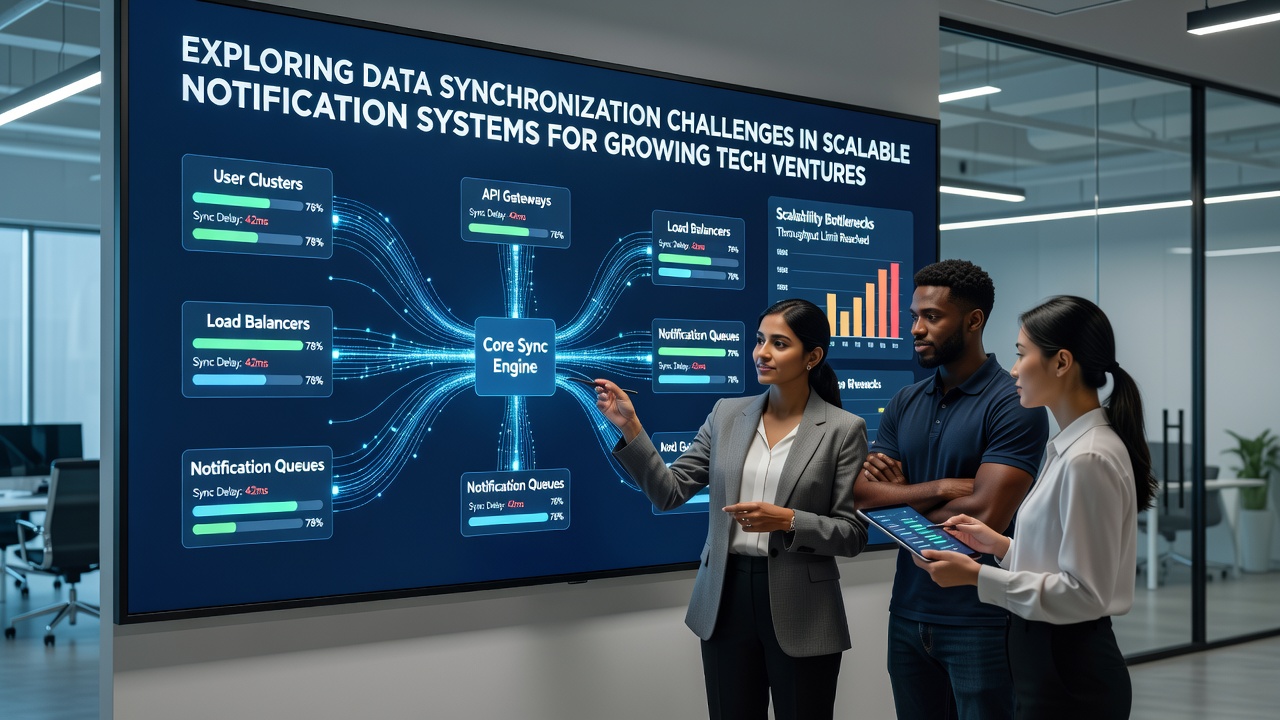
As tech ventures attract larger audiences, the volume of events requiring synchronization rises exponentially, and this strains existing notification frameworks built for smaller scales. Researchers discovered that push notification services must coordinate user preferences, device tokens, and delivery statuses across sharded databases, while any mismatch triggers failed deliveries or redundant sends. Figures from industry analyses reveal that ventures experiencing rapid growth report up to triple the synchronization errors compared to stable periods, prompting investments in monitoring tools that track replica states in real time.
One documented case involved a mobile platform that expanded into new markets and encountered token mismatches between regional servers, causing notifications to arrive hours late for certain user segments. Experts have observed that such delays compound when third-party integrations like analytics providers feed additional data streams into the system, requiring extra layers of validation. Solutions often involve implementing distributed consensus algorithms like Raft or Paxos to ensure agreement on event ordering before broadcasts occur.
Strategies Employed by Expanding Ventures
Ventures address these challenges through hybrid approaches that combine in-memory caches with persistent storage layers, allowing faster reads while background processes handle synchronization tasks. According to findings from academic papers on distributed computing, techniques such as conflict-free replicated data types enable concurrent updates without immediate locking, which proves useful for notification preferences that change frequently. Data from operational reports shows that companies adopting these methods reduce error rates by integrating automated reconciliation scripts that run during off-peak hours.
Yet the reality is that geographic distribution adds further complexity because regulations in various regions dictate data residency requirements, forcing ventures to maintain localized copies that still need periodic alignment. Canadian research institutions have documented how compliance frameworks influence synchronization intervals, extending them in some cases to meet privacy standards without compromising delivery reliability. Ventures often deploy edge computing nodes closer to users to minimize round-trip times, though this setup demands robust protocols to propagate changes back to central repositories.
Future Directions and Monitoring Practices
Monitoring tools now incorporate machine learning models to predict synchronization bottlenecks based on historical traffic patterns, and those who implement such systems gain earlier warnings before outages affect notification flows. Industry organizations report that integrating these predictive elements helps ventures allocate resources more effectively during growth spurts. External benchmarks, including work from the National Institute of Standards and Technology, provide frameworks for testing consistency under simulated partition scenarios that mirror real-world network disruptions.
Another avenue involves adopting standardized protocols for event sourcing, which records every state change as an immutable log that multiple services can replay independently. This approach, highlighted in recent technical evaluations, allows growing platforms to rebuild notification states accurately even after partial system failures. Ventures that follow these practices maintain audit trails useful for troubleshooting and compliance audits alike.
Conclusion
Data synchronization in scalable notification systems remains a persistent concern for tech ventures navigating expansion, and ongoing developments in distributed technologies continue to shape practical responses. Evidence from multiple studies underscores the value of proactive architecture decisions that account for both current loads and projected growth trajectories. As platforms evolve, the integration of advanced consensus methods and monitoring capabilities supports reliable delivery across increasingly complex environments.