Eden Koch · 10 October 2026
How Latency Spikes in Event Notification Networks Reshape Resource Allocation for Early-Stage Digital Platforms
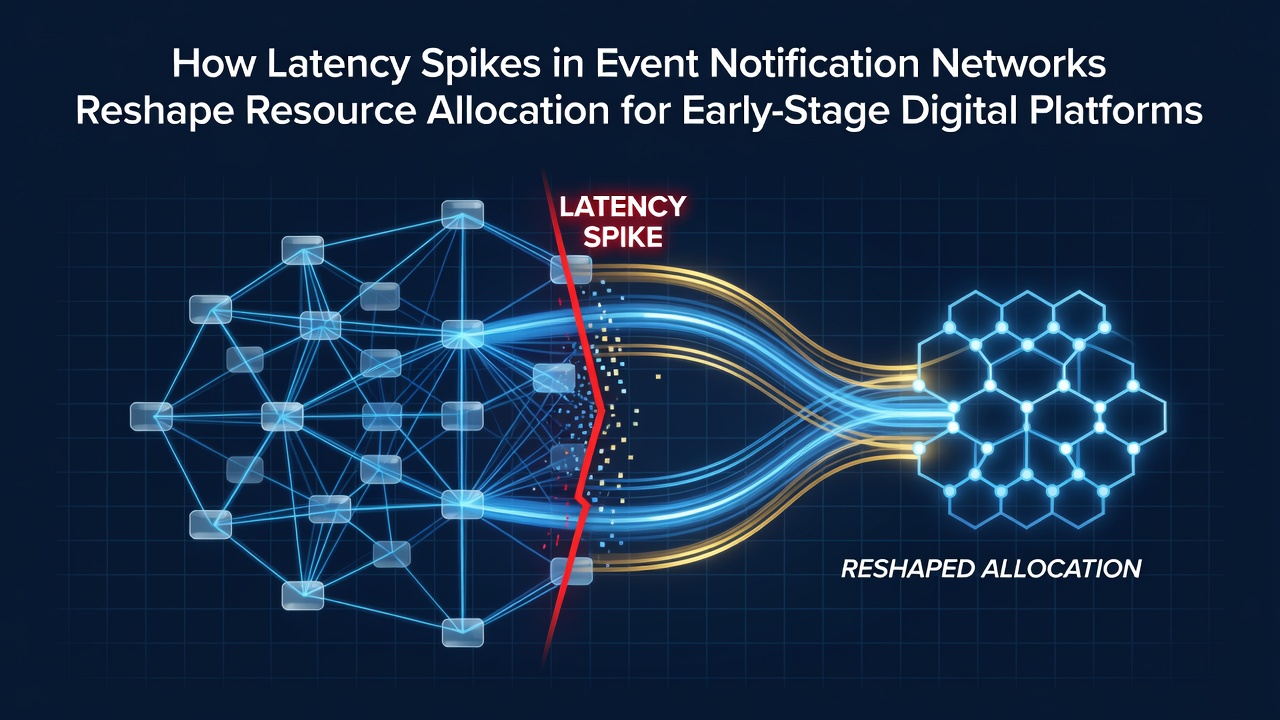
Event notification networks form the backbone of real-time updates in many early-stage digital platforms, where messages about user actions, data changes, or system events travel through pub/sub architectures and push services, yet latency spikes can force sudden reallocations of compute, storage, and network resources to maintain service levels. Researchers have documented how these spikes occur when network congestion, message queue overflows, or third-party provider delays interrupt the steady flow of notifications, prompting platform operators to redirect server capacity, adjust caching layers, and sometimes scale out additional instances in cloud environments. By October 2026, industry monitoring tools had captured multiple instances where platforms experienced notification delivery times jumping from under 100 milliseconds to several seconds during peak hours, leading teams to rebalance workloads across regions and prioritize critical event streams over less urgent ones.
Core Mechanisms Behind Latency in Notification Systems
Event notification networks rely on brokers, queues, and delivery endpoints that handle high volumes of small messages, and latency spikes often trace back to factors such as uneven traffic distribution, insufficient buffer sizes, or dependencies on external APIs that introduce variable response times. Data from network performance studies shows that when a spike hits, the immediate effect includes queued messages piling up, which in turn consumes memory and processing threads that were originally allocated for other platform functions like user authentication or content rendering. Those who manage these systems frequently observe that early-stage platforms, with their limited initial infrastructure budgets, must then decide whether to provision more virtual machines, optimize existing code paths, or implement backpressure techniques to throttle incoming events until capacity recovers.
Resource Reallocation Patterns Observed in Practice
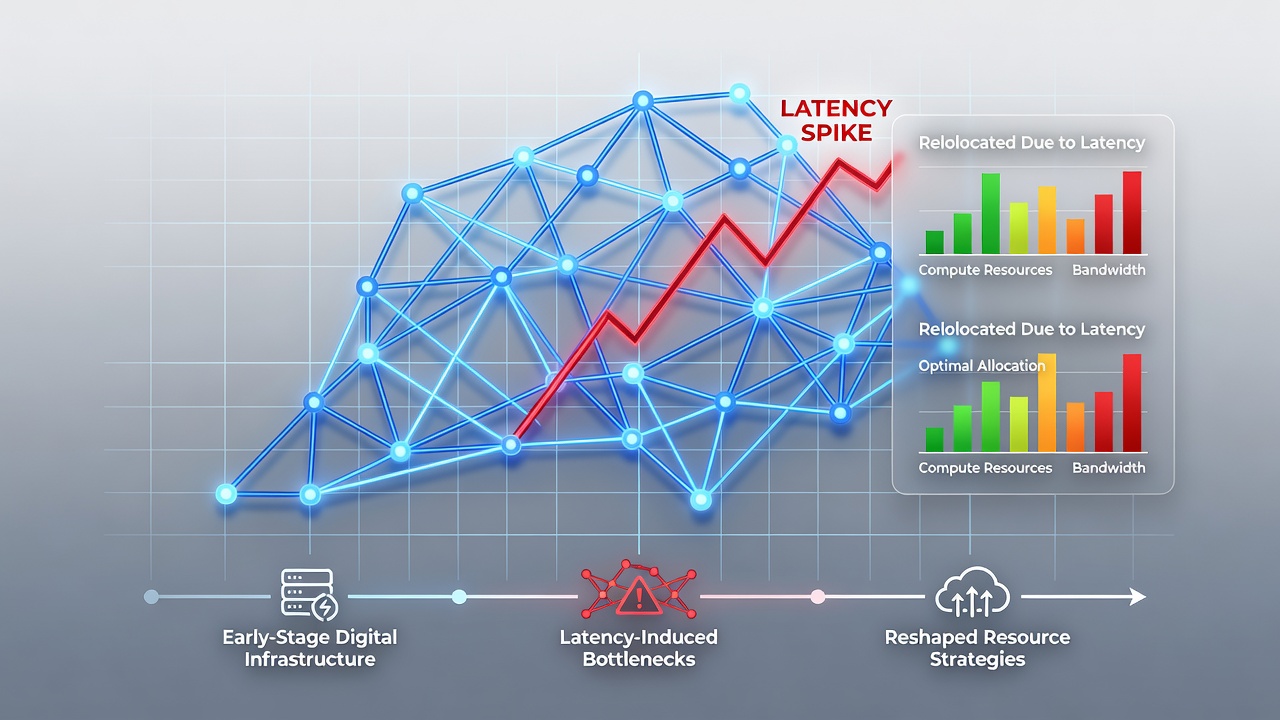
Once latency exceeds acceptable thresholds, operators typically shift resources by increasing the number of worker nodes dedicated to message processing, expanding database connection pools for event logging, and rerouting traffic through alternative content delivery networks. Figures from infrastructure reports reveal that platforms often move 20 to 40 percent of their compute budget toward notification handling during prolonged spikes, which reduces availability for analytics pipelines or machine learning training jobs that run in parallel. One documented case involved a startup that migrated part of its event workload to a secondary cloud region after repeated delays, incurring higher inter-region data transfer costs but stabilizing delivery rates for user-facing features.
Impact on Scaling Decisions and Budgets
Early-stage platforms face particular pressure because their resource allocation models are still evolving, and latency spikes can accelerate the move from shared hosting or basic container setups to more sophisticated orchestration tools like Kubernetes with auto-scaling policies tuned specifically for event volume. According to analyses published by the National Institute of Standards and Technology, consistent monitoring of notification latency helps teams predict when to pre-allocate bandwidth and storage, thereby avoiding emergency scaling that drives up monthly cloud bills. Platforms that integrate predictive alerts based on historical spike patterns have managed to smooth out these reallocations, keeping overall expenditure growth aligned with user acquisition rather than reactive firefighting.
Architectural Adjustments That Follow Spike Events
Teams respond to recurring latency issues by introducing circuit breakers, message deduplication layers, and partitioned topics that isolate high-priority notifications from bulk traffic, changes that require upfront investment in engineering time and additional monitoring software. Research from the European Commission's digital infrastructure studies indicates that such modifications often result in more resilient systems overall, even though they temporarily divert developer resources away from feature development. In several tracked examples, platforms that adopted these patterns saw their notification-related compute usage stabilize within weeks, freeing capacity for other growth initiatives while maintaining lower average latency during subsequent traffic surges.
Longer-Term Effects on Platform Infrastructure Planning
Over multiple quarters, repeated latency events encourage operators to embed redundancy and geographic distribution into their core designs from the outset, rather than treating them as afterthoughts. Observers note that this shift influences hiring priorities, with more emphasis placed on site reliability engineers who specialize in event-driven systems, and it also affects vendor selection as platforms seek providers with stronger uptime guarantees and lower tail latencies. Data collected through 2026 shows that companies incorporating these lessons early tended to experience fewer disruptive reallocations as their user bases expanded, allowing steadier progress on product roadmaps.
Conclusion
Latency spikes in event notification networks continue to drive measurable changes in how early-stage digital platforms distribute their limited resources, prompting both immediate tactical shifts and longer-term architectural refinements. Evidence from infrastructure monitoring and academic reviews confirms that these events accelerate the adoption of scalable designs and proactive capacity planning, ultimately shaping the operational maturity of platforms as they grow.