Kai Krüger · 26 September 2026
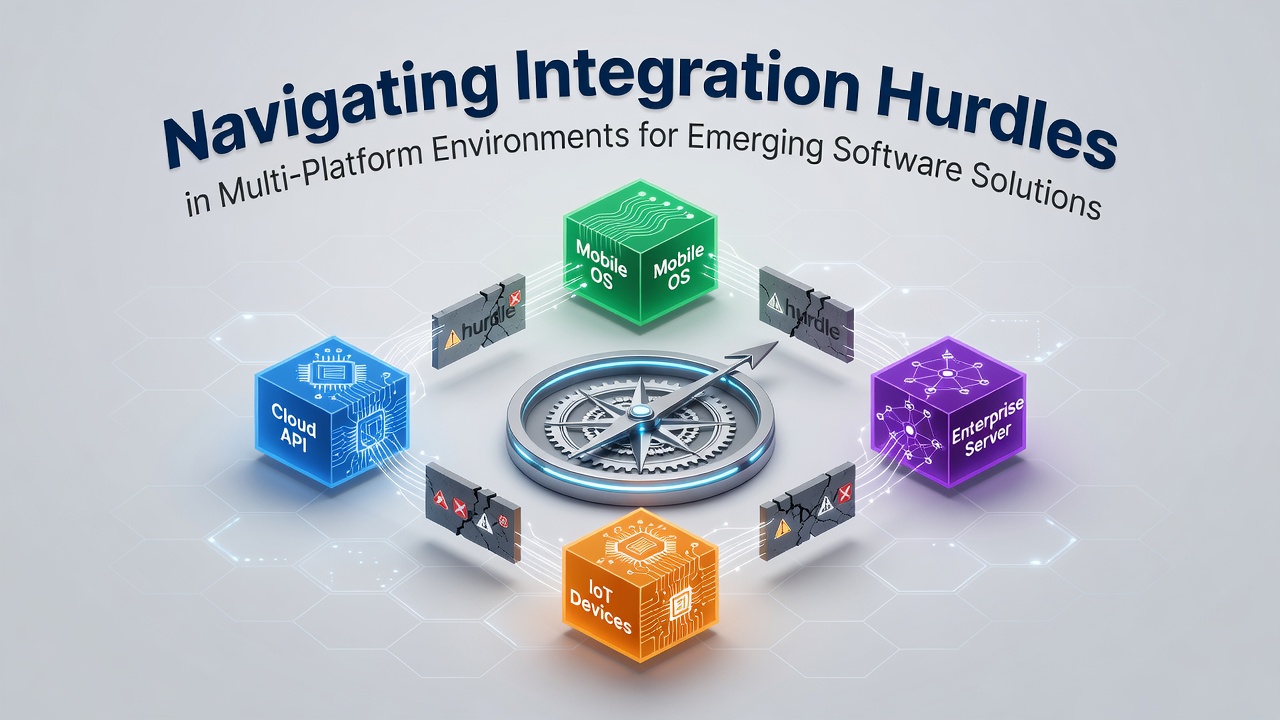
Navigating Integration Hurdles in Multi-Platform Environments for Emerging Software Solutions
Emerging software solutions face persistent obstacles when they attempt to function consistently across mobile operating systems, desktop environments, cloud services, and embedded devices because each platform brings distinct protocols, data formats, and performance constraints that require careful coordination. Researchers at academic institutions have documented how these differences create friction in data exchange and user experience continuity, particularly for startups deploying applications in September 2026 when hybrid work models continue to expand device diversity.
Core Technical Barriers
Platform fragmentation begins with varying application programming interfaces that force development teams to maintain separate code branches, and synchronization failures occur when real-time updates do not propagate uniformly across networks with different latency profiles. Data from industry surveys indicates that nearly 40 percent of integration projects encounter delays during the initial mapping of object models between relational databases and NoSQL stores, while legacy systems often lack support for modern encryption standards required by newer platforms.
Developers address these issues through middleware layers that translate requests between incompatible endpoints, yet the added abstraction increases processing overhead and introduces potential points of failure that must undergo rigorous testing cycles. Studies published by the National Institute of Standards and Technology highlight how standardized containerization practices reduce some of these translation errors by isolating dependencies, although container orchestration itself demands specialized expertise that smaller teams may not possess initially.
Security and Compliance Requirements
Security protocols differ markedly between platforms, creating vulnerabilities at integration points where authentication tokens move between environments without consistent validation rules. Organizations must therefore implement zero-trust architectures that verify every request regardless of origin, a measure that adds computational cost but aligns with guidelines issued by multiple regulatory bodies across regions. Observers note that compliance documentation for data residency rules in multi-jurisdictional deployments can extend project timelines by several months when encryption key management systems fail to interoperate.

Practical Approaches Used by Teams
Many development groups adopt microservices architectures that allow individual components to scale independently while exposing well-defined contracts through REST or GraphQL interfaces, and this modular structure permits incremental updates without full system redeployment. Research indicates that organizations investing in automated API testing frameworks detect compatibility issues earlier in the release cycle, thereby lowering the frequency of post-launch patches. Those who studied this approach often discover that event-driven messaging queues provide reliable delivery across platforms even when intermittent connectivity disrupts direct calls.
Configuration management tools further assist by maintaining consistent environment variables and secrets across development, staging, and production instances regardless of underlying infrastructure providers. Figures from recent technical reports reveal that companies utilizing infrastructure-as-code practices experience fewer configuration drift incidents, which directly reduces integration failures during platform migrations.
Observed Outcomes in Deployments
Take one research team that tracked an enterprise resource planning rollout across desktop clients, mobile applications, and web portals; they recorded a 25 percent reduction in support tickets after introducing a unified identity provider that handled session management centrally. Another example comes from a logistics startup that connected IoT sensors on vehicles to analytics dashboards hosted in multiple cloud regions, where adoption of edge computing nodes minimized data loss during network partitions. These cases demonstrate measurable improvements once initial mapping and testing phases conclude successfully.
Conclusion
Integration across multi-platform environments remains an ongoing engineering discipline that combines protocol translation, security hardening, and automated validation to deliver reliable software solutions. As new device categories and cloud services continue to appear, teams rely on established standards and tooling to maintain compatibility without sacrificing performance or compliance. Data collected through 2026 shows consistent progress when organizations prioritize early testing and modular design patterns that accommodate future platform additions.