
Eden Koch · 21 November 2026
Shifting Signal Pathways in Distributed SaaS Architectures During Rapid User Onboarding Phases
Distributed SaaS architectures handle user onboarding through coordinated signal pathways that route authentication requests, data synchronization events, and resource allocation commands across multiple services, and these pathways often undergo reconfiguration when user volumes increase sharply. Research from cloud infrastructure studies indicates that onboarding phases trigger dynamic adjustments in message queues and event buses to maintain consistency across nodes.
Engineers at major platforms observe that initial onboarding flows typically start with centralized API gateways directing user registration signals to identity services, after which profile data propagates through distributed caches and databases. When registration rates climb, systems shift these pathways toward edge nodes and asynchronous workers to prevent bottlenecks, and data from industry reports shows this transition reduces latency by distributing load across regional clusters.
Core Mechanisms Behind Pathway Adjustments
Signal pathways in these setups rely on publish-subscribe models where events such as account creation trigger downstream processes including email verification, billing setup, and permission grants, yet rapid onboarding forces switches to alternative routes that bypass saturated central hubs. Observers note that load balancers detect queue depths and redirect traffic accordingly, which allows secondary pathways through containerized microservices to absorb the surge.
Studies on distributed systems reveal that during peak periods services activate circuit breakers and fallback routing tables, and these changes ensure that critical onboarding signals continue even if primary databases experience contention. In November 2026 analysts at research institutions projected further adoption of AI-driven routing that predicts onboarding waves based on historical telemetry patterns.
Impact on Resource Allocation and Scaling
Resource allocation adjusts in tandem with pathway shifts because onboarding signals carry metadata about user preferences and device types that influence compute provisioning decisions. Teams managing these environments report that auto-scaling groups respond by spinning up additional instances in proximity to high-traffic regions, while orchestration tools like Kubernetes update service meshes to reflect new endpoint mappings.
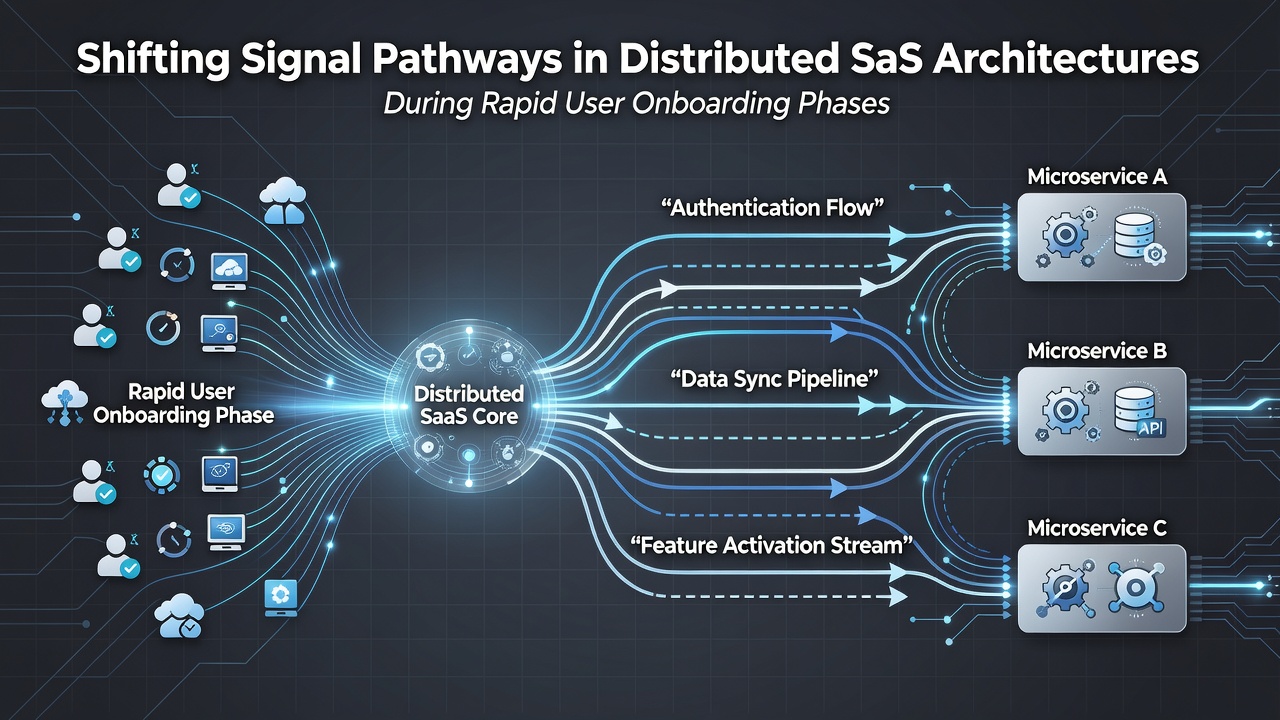
Evidence from performance benchmarks demonstrates that such reallocations maintain throughput when user sign-ups accelerate, although synchronization lags can appear if inter-region replication lags behind the signal volume. Experts tracking these metrics highlight the role of eventual consistency models that permit temporary divergence across nodes until reconciliation completes.
Case Examples from Growing Platforms
One documented scenario involved a collaboration platform that experienced a fourfold increase in daily registrations after a marketing campaign, prompting its architecture to reroute notification signals through regional queues instead of a single global broker. The adjustment preserved delivery reliability and allowed billing pathways to process payments without interruption, according to internal telemetry shared in technical case studies.
Another instance from an analytics SaaS provider showed how authentication signals moved to dedicated edge authentication services during onboarding spikes, and this change cut average response times while freeing core application servers for data ingestion tasks. Researchers analyzing similar transitions point to consistent patterns across multiple vendors where pathway diversification correlates with sustained availability metrics.
Technical Considerations for Implementation
Implementation requires careful configuration of service meshes and event streaming platforms such as Apache Kafka or AWS EventBridge to support dynamic topic partitioning that accommodates fluctuating signal loads. Data indicates that monitoring tools track pathway health through latency histograms and error rates, enabling automated policies that trigger reroutes before user experience degrades.
Security protocols also adapt because shifted pathways may traverse additional network segments that demand updated encryption and access controls, and compliance frameworks from bodies like NIST in the United States alongside ENISA guidance in Europe outline requirements for maintaining audit trails during these reconfigurations.
Conclusion
Shifting signal pathways represent a fundamental adaptation mechanism in distributed SaaS architectures that supports rapid user onboarding by redistributing event flows across available infrastructure. Continued refinement of routing logic and monitoring practices helps organizations sustain performance as adoption accelerates, with ongoing developments expected to integrate predictive analytics more deeply into these processes.