Ulrich Brooks · 12 September 2026
The Ripple Effects of Brand Evolution on User Retention Strategies Within Tech Startups
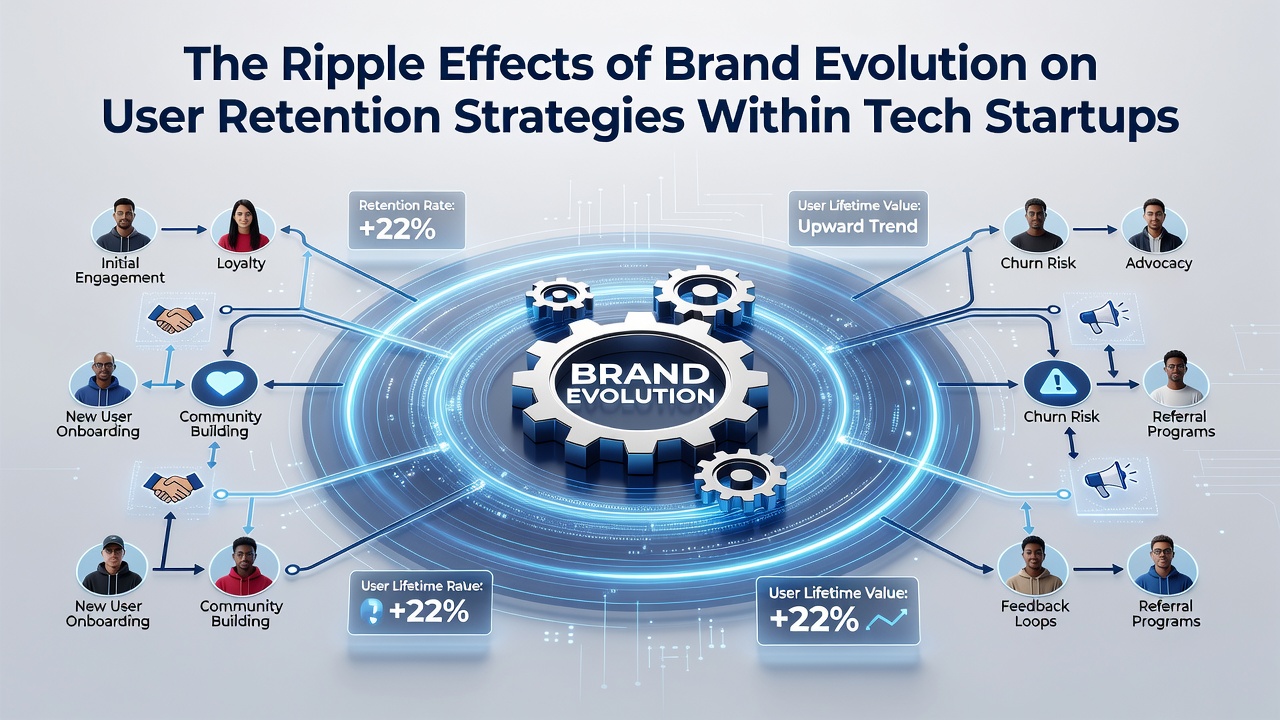
Tech startups frequently undergo brand evolution as they scale, pivot products, or respond to market shifts, and these changes send ripple effects through user retention strategies that companies must navigate carefully. Data from industry reports indicate that startups rebranding between 2024 and 2025 experienced average retention rate fluctuations of 15 to 25 percent in the first six months following the update, according to figures compiled by research institutions tracking digital economy trends. Observers note that such evolution often involves visual identity refreshes, messaging adjustments, and value proposition refinements, all of which intersect directly with how existing users perceive ongoing value in the product.
Core Mechanisms of Brand Evolution in Early-Stage Companies
Startups typically initiate brand evolution when initial positioning no longer aligns with expanded offerings or when user feedback highlights gaps in market perception. Researchers at academic centers studying entrepreneurship have documented that companies completing a full rebrand within their first three years of operation often see corresponding adjustments in retention tactics, including personalized onboarding sequences and loyalty program redesigns. These adjustments occur because brand signals influence user trust, and any shift requires reinforcing that trust through consistent communication across channels. Evidence suggests the process accelerates in competitive sectors like SaaS and fintech, where differentiation hinges on both innovation and perceived stability.
Direct Impacts on Retention Metrics
Retention strategies in tech startups rely on metrics such as monthly active user percentages, churn rates, and lifetime value calculations, and brand evolution can alter these numbers in measurable ways. A study released by a Canadian research consortium in early 2025 found that startups implementing gradual brand updates rather than abrupt overhauls maintained higher retention continuity, with churn increases limited to under 8 percent compared to sharper spikes in other cases. People who analyze startup performance data often track these patterns through cohort analysis, revealing that users acquired before the evolution show different engagement curves than those acquired afterward. What's interesting is how communication timing plays a role: announcements delivered via in-app notifications paired with email sequences tend to stabilize retention better than standalone website updates alone.
Case Examples from Recent Startup Activity
One notable instance involves a European SaaS firm that evolved its brand in mid-2025 to emphasize AI integration, which required revising retention strategies around feature education modules. Data indicates the company sustained user bases by introducing segmented email campaigns that highlighted continuity between old and new branding elements. Another example from an Australian tech venture shows how a name change combined with logo updates prompted the rollout of community forums where long-term users could voice concerns, resulting in documented retention recovery within four months. These cases illustrate patterns where proactive strategy adjustments mitigate potential losses, while passive approaches correlate with higher drop-off rates according to aggregated industry statistics.
Strategic Adaptations for Sustained User Bases
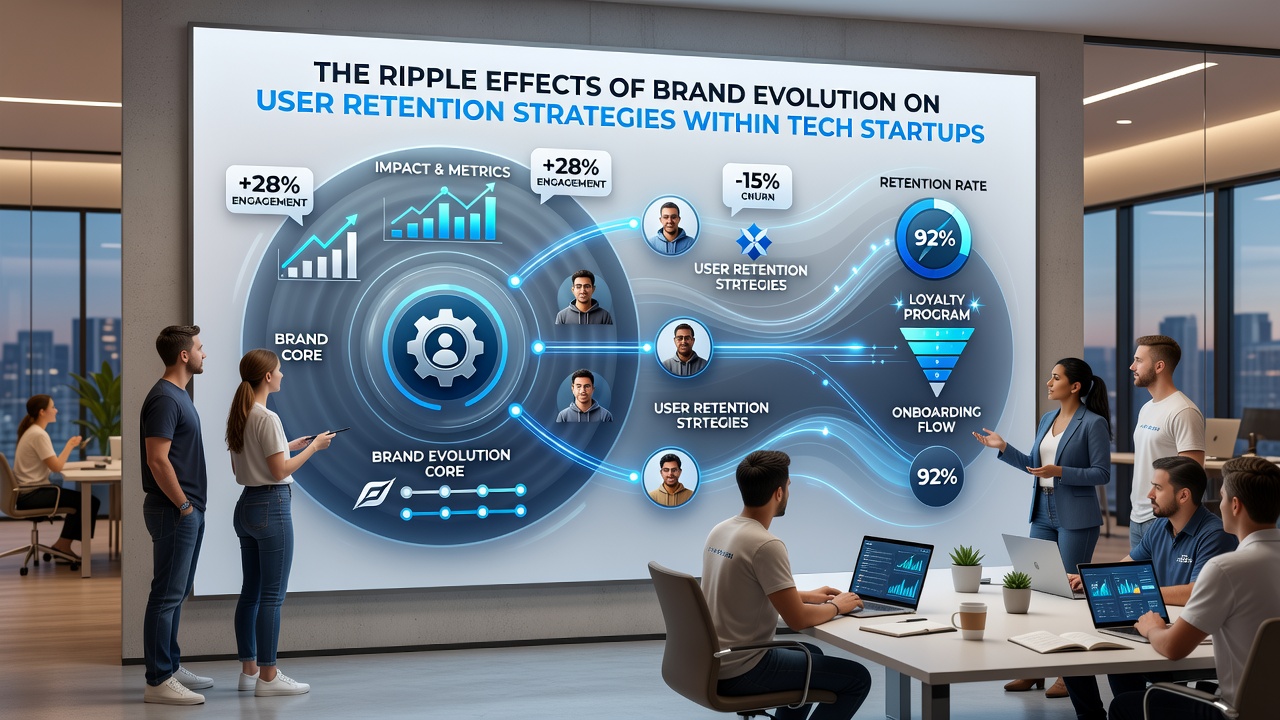
Companies adapting retention strategies amid brand evolution often integrate feedback loops that collect user sentiment before, during, and after the transition. Reports from the Australian Bureau of Statistics on small business innovation highlight that startups allocating resources to A/B testing of new brand assets achieve more stable retention outcomes. And organizations in the US digital sector have adopted similar methods, drawing on data from sources like university-led entrepreneurship labs that emphasize iterative testing. But here's the thing: successful adaptations frequently combine technical updates such as updated app interfaces with narrative elements that frame the evolution as an enhancement rather than a departure. This approach helps maintain continuity in user relationships while allowing room for growth.
Broader Market Context Entering September 2026
As markets prepare for September 2026, analysts project continued pressure on tech startups to evolve brands in response to regulatory changes around data privacy and AI transparency across multiple regions. Figures from EU digital market monitoring bodies reveal rising expectations for clear user communication during such transitions, which directly feeds into retention planning. Startups tracking these developments adjust strategies accordingly, incorporating compliance messaging into retention touchpoints to reduce friction for existing users. Evidence from cross-border studies shows that firms aligning brand evolution with these external timelines experience smoother metric transitions compared to those treating the processes separately.
Conclusion
Brand evolution in tech startups produces measurable ripple effects on retention strategies that extend across metrics, communication methods, and long-term user relationships. Research compiled from varied geographic sources demonstrates consistent patterns where thoughtful integration of evolution steps with retention tactics supports continuity, while disjointed approaches correlate with greater variability. Observers continue to monitor these dynamics as startups navigate scaling pressures through 2026 and beyond, with data serving as the primary guide for decision-making in this area.